![[back]](/assets/home_24dp_E3E3E3_FILL0_wght400_GRAD0_opsz24.svg "[back]")
![[search]](/assets/search_24dp_E3E3E3_FILL0_wght400_GRAD0_opsz24.svg "[search]")
Medea - Valerius Flaccus
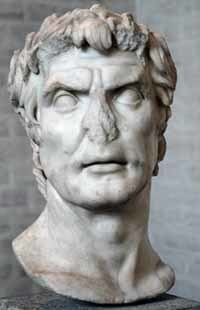
Valerius Flaccus, a prophetes
He participated in ritual interpretation, not just literary production
So when he writes Medea, this is not mythography at a distance.
It is someone inside the prophetic–oracular institution re-articulating an older Greek mystery figure.
That alone makes Argonautica unique.
Table of Contents
- Life
- Valerius Flaccus, Medea, and the Oracular Lineage
- Priestly Status
- Detailed Summary of Valerius Flaccus’ Argonautica
- Argonautica as Initiatory Rite in Epic Form
- See Also
Life
Gaius Valerius Flaccus. This is not the Republican general or the jurist, but the Flavian-era epic poet, active in the late 1st century CE. Our knowledge of his life is limited but unusually pointed. He flourished under Vespasian and likely into the early reign of Domitian, dying young around 90 CE, before completing his Argonautica. What distinguishes him from nearly every other Latin poet is that he was not merely literary: he served as a quindecimvir sacris faciundis, one of the fifteen priests responsible for guarding, interpreting, and deploying the Sibylline Books on behalf of the Roman state. This office makes him, in the strict Roman sense, a prophetes—an authorized interpreter of oracular knowledge.
Valerius’ poetry must therefore be read as the work of someone inside the oracular institution, not an outsider aestheticizing it. By his lifetime, much of the Sibylline corpus was already restricted, fragmentary, or politically sensitive, and direct discussion of archaic prophetic technique—especially Greek and female-mediated forms—was no longer viable. His choice to retell the Argonaut myth, and to center Medea as a dread-bearing, pharmakic, foresight-laden figure, reflects this constraint. Argonautica becomes the medium through which an oracle-keeper could still preserve memory of older Hellenic initiatory and prophetic structures without violating institutional secrecy. In that sense, Gaius Valerius Flaccus stands as the last historically attested poet who could still write from within the oracular system rather than merely about it.
- "Institutional Prophetes": While he was a priest (a quindecimvir), ancient sources also (more popularly) identify him as a poet (poeta). Calling him an "institutional prophetes" frames the fact of his historical priestly role which supports the ensuing argument.
- Medea as a "Coded" Sibyl: The idea that Valerius Flaccus uses Medea to deliberately "rearticulate older Hellenic prophetic and pharmakic mechanics sideways" is an interpretive argument. It relies on connecting Medea's "altered states" and "technical mastery of substances" to descriptions of archaic Sibyls.
- "Last Major Latin Work Written From Within the Oracular Institution": This claim is an assessment of the Roman literary canon and the known biographical details of other Roman authors and priests.
Valerius Flaccus, Medea, and the Oracular Lineage
Valerius Flaccus occupies a singular position in the transmission of Medea’s figure because he was not merely a literary craftsman but an institutional prophetes—a member of the quindecimviri sacris faciundis, the Roman priestly college entrusted with guarding and interpreting the Sibylline Books. This dual identity matters. By the late first century CE, large portions of the Sibylline corpus were already restricted, fragmentary, or lost, and direct exposition of archaic Greek oracular practice was politically and ritually constrained. In this context, Flaccus’ Argonautica functions as a liminal vessel: a poetic epic that rearticulates older Hellenic prophetic and pharmakic mechanics sideways, under the cover of myth. His Medea is not primarily a romantic sorceress nor a moralized tragic victim; she is a knowing woman whose authority arises from altered states, dread, foresight, and technical mastery of substances—precisely the traits antiquarian writers ascribe to early Sibyls before their domestication by civic cult.
That Flaccus, an oracle-keeper himself, chooses Medea as the focal point for this knowledge is telling: the poem preserves, in coded epic form, the memory of a female chthonic–prophetic lineage that could no longer be transmitted openly. In this sense, Argonautica stands as the last major Latin work written from within the oracular institution that still remembers what prophecy looked like as practice rather than abstraction.
Priestly Status
Proof that Valerius Flaccus was a quindecimvir sacris faciundis is not a single external biographical statement, but is primarily derived from specific, widely accepted interpretations of lines in the proem of his own epic poem, the Argonautica.
Poetic Evidence
The key evidence comes from the opening of Book 1, lines 5–7, where the poet invokes Apollo:
Guide me, Apollo, if the tripod that knows the Cumaean priestess stands in my pure home, if a worthy laurel flourishes upon my forehead...
- "Cortina" (Tripod/Basin): The cortina was the sacred basin atop the Delphic/Cumaean tripod, which was a specific symbol of the quindecimviri office. Scholars argue that each quindecimvir kept a physical cortina (or a representation of one) as a symbol of his priesthood at his home.
- "Laurea digna fronte viret" (Laurel crown): The laurel wreath was also a key emblem and garment associated with this priestly college, as they were priests of Apollo.
The poet's phrasing—describing his literary inspiration as dependent on his possession of these specific priestly symbols—is considered a definitive (though poetic) claim to membership in the college.
Supporting Evidence
A Dedication Fragment: Some interpretations have linked an inscribed fragment found in the early 20th century to Valerius Flaccus, listing him as a quindecimvir, though this is more debated than the poetic evidence.Other References: References in the poem to the rites and lustration of Cybele (Book 8.239-241), a cult managed by the quindecimviri, further support the idea that the author was an insider to these specific religious practices.
The consensus among most modern scholars is that the combination of these elements makes a very strong, nearly universally accepted, case for his priesthood, intended by the poet to provide his work with unique religious authority.
Detailed Summary of Valerius Flaccus’ Argonautica
Scope and structure.
Flaccus’ Argonautica retells the voyage of Jason and the Argonauts in eight books (the poem breaks off unfinished), broadly following the mythic itinerary known from earlier Greek tradition while reshaping its emphases for a Flavian Roman audience. The narrative moves from the mustering of heroes and the launch of the Argo, through perilous encounters and tests, to Colchis and the acquisition of the Golden Fleece, with Medea’s intervention as the decisive turning point.
Jason and heroic inadequacy.
Unlike earlier heroic epics that center unambiguous martial excellence, Flaccus’ Jason is marked by hesitation and dependency. He is repeatedly positioned as someone who requires guidance—divine, prophetic, or technical—to succeed. This narrative choice shifts agency away from brute force and toward knowledge-mediated action.
Medea’s emergence.
When the poem reaches Colchis, Medea is introduced not simply as a king’s daughter but as a figure already saturated with dread, foresight, and interior conflict. Flaccus emphasizes her capacity to know before acting: she anticipates outcomes, senses danger, and understands the mechanics of power at work around her. Her interiority is rendered as a pressured space where fear, compulsion, and insight converge—an experiential profile consistent with ancient descriptions of prophetic mania rather than theatrical magic.
Pharmakic technē.
Medea’s decisive interventions operate through technē: the preparation and application of substances, the management of bodily states, and the timing of actions under conditions of risk. Flaccus repeatedly frames these acts as skilled procedures rather than supernatural miracles. The language and staging align with Roman antiquarian explanations of prophecy as induced and prepared, not passively received.
Prophecy without naming the Sibyl.
Although the Sibyls are never named, the poem embeds their mechanics: speech that arises from inner compulsion, knowledge that terrifies the knower, and authority that stands outside civic priesthood. Medea functions as a prophetic node whose insight guides events while remaining socially marginal and dangerous—an echo of how early Greek Sibyls were remembered before later moralization.
Chthonic geography and dread.
Flaccus thickens the atmosphere around Colchis and its rites: darkness, secrecy, subterranean forces, and the constant proximity of death. This chthonic framing situates Medea’s knowledge as something drawn from depth rather than from Olympian clarity, reinforcing her alignment with older earth-bound prophetic traditions.
Outcome and moral tension.
The successful acquisition of the Fleece is inseparable from Medea’s knowledge, and Flaccus does not resolve the moral tension this creates. Instead, he leaves the reader with an unresolved recognition: victory is achieved through dangerous knowing, and the cost of such knowledge cannot be fully contained by heroic narrative.
Why the poem matters historically.
Taken as a whole, Argonautica is not just a retelling of a Greek myth in Latin verse. It is a late, institutional memory-text—one written by an oracle-keeper who could no longer publish oracular doctrine directly. Medea becomes the safe mythic mask for archaic female prophecy, pharmakic initiation, and chthonic foresight. In preserving these elements within epic, Flaccus offers us the last sustained literary glimpse of a tradition already receding into secrecy and loss.
Argonautica as Initiatory Rite in Epic Form
In Valerius Flaccus’ Argonautica, the voyage of the Argo reads less as heroic adventure than as a formal initiatory sequence, structured according to Orphic cosmology. The expedition begins in the Ouranic register—ordered intention, collective resolve, and the aspiration toward kleos—but this clarity is immediately destabilized. Storms, portents, and dread fracture heroic identity, initiating a Gaian descent: the Argonauts are repeatedly driven into liminal zones where fear, disorientation, and bodily risk dominate. This descent is not accidental; it is the necessary lowering of consciousness into the chthonic substrate where the old self can be exposed and undone.
Medea enters precisely at the nadir of this descent. She is not a helper in the Olympian sense but the custodian of initiatory fire, the one who knows how to hold the initiate at the edge of dissolution without letting him perish. Her pharmakic actions—preparing substances, applying salves, modulating states—function as controlled fire: they induce terror, vulnerability, and altered perception while preventing irreversible collapse. In Orphic terms, this is the moment of symbolic death. Jason does not conquer; he survives the burning away of naive heroic identity. The trials he faces under Medea’s guidance enact πάθει μάθος—learning through what happens—where fear is not an enemy but the agent that strips the initiate of false coherence.
What follows is not a simple return but resurrection into Aionic presence. After the pharmakic ordeal, time in the poem behaves differently: decisions sharpen, action becomes strangely calm, and events seem to unfold with inevitability rather than struggle. This reflects the Orphic shift from chronos to aiōn—an experienced timelessness in which the initiate acts from presence rather than panic. Medea herself inhabits this aionic register; she knows outcomes before they unfold and bears the cost of that knowing internally. Her dread is the price of standing in the timeless while others still move through fear-bound time.
Only after this aionic interval does Ouranic ordering reassert itself. Jason can now act decisively, not because he has gained brute power, but because his mind has been reordered by fire. The heroic self that emerges is quieter, more instrumental, and dependent on knowledge rather than impulse. Importantly, Valerius does not romanticize this outcome. The new identity is functional but costly: resurrection does not restore innocence. Medea, the initiatrix, is increasingly isolated, bearing the residue of chthonic contact so that the initiate may depart “whole.”
Read this way, Argonautica preserves the full Orphic arc: descent into Gaia (fear, dissolution), passage through initiatory fire (pharmakon as ordeal), emergence into aionic presence (timeless knowing), and reconstitution under Ouranic order (directed mind). That Valerius Flaccus—himself an oracle-keeper—chooses Medea as the axis of this transformation is decisive. The poem is not merely myth retold but initiation remembered, encoded in epic at the moment
See Also
- Medea for general information on Medea
- Orphic Cosmology - for a breakdown on the mechanics of Gaia / Ouranos / Aion / Fire.